
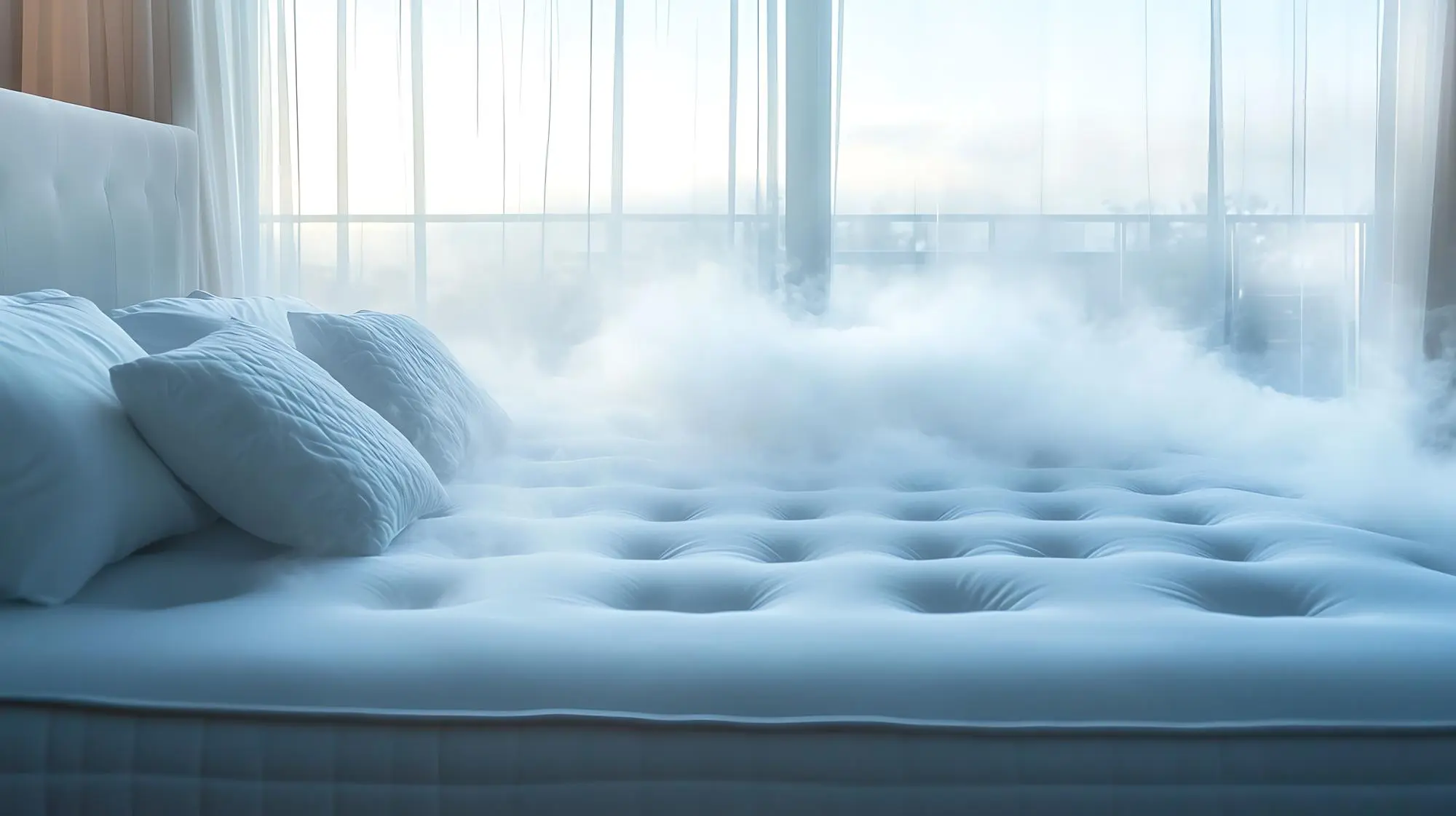
Some people need complete darkness to sleep.
Some need silence.
And some spend half the night trying to find the coldest corner of the mattress.
If you regularly wake up feeling hot, throw your blanket off in the middle of the night, or keep flipping your pillow searching for the cooler side, you may be what the sleep industry calls a hot sleeper.
And in India, you certainly aren't alone.
Our climate already makes comfortable sleep challenging for much of the year. Add a heat-retaining mattress to the equation, and even an air-conditioned bedroom can start feeling uncomfortable.
So, should hot sleepers buy a cooling mattress?
Can mattress technology actually make a difference?
And what should you look for beyond a large “cooling mattress” label on the packaging?
Here’s what matters.
What Is a Hot Sleeper?
A hot sleeper is someone who frequently feels excessively warm while sleeping.
You may:
- Wake up sweating
- Constantly change sleeping positions
- Remove blankets during the night
- Prefer keeping the AC or fan running
- Feel noticeably warmer where your body meets the mattress
- Struggle to enjoy an afternoon nap during warmer weather
Several factors can influence how warm you feel while sleeping.
Your bedroom temperature.
Bedding.
Clothing.
Personal preferences.
And, importantly, your mattress.
Why Do Some Mattresses Sleep Hot?
Your body continuously produces heat.
When you lie on a mattress, some of that heat becomes concentrated between your body and the sleeping surface.
The problem begins when the mattress struggles to release it.
Certain dense materials can restrict airflow and allow warmth to accumulate around the body.
This can create an uncomfortable sleep environment, particularly during long periods of contact with the mattress.
That is why choosing the best mattress for a hot sleeper isn't simply about finding something that feels cold when you first touch it.
The mattress needs to manage heat over time.
Do Cooling Mattresses Actually Work?
Yes—but the term cooling mattress can mean many different things.
Some mattresses use cooling fabrics.
Others use breathable foam.
Some focus on improved airflow.
Others incorporate specialised materials intended to manage temperature.
The effectiveness depends on how the mattress is designed and what technologies are actually used.
As we explored in How Cooling Technology Is Changing the Way India Sleeps, genuine temperature management involves more than adding a single “cooling” layer.
For hot sleepers, the complete mattress construction matters.
What Should Hot Sleepers Look for in a Mattress?
Let's make this practical.
If you regularly sleep hot, these are the factors worth considering.
1. Breathable Mattress Construction
Air needs space to move.
A mattress designed with breathability in mind can allow heat to dissipate more effectively than one built entirely from dense, heat-retaining materials.
When comparing mattresses, look beyond the outer fabric.
Ask how the complete construction manages airflow.
Because a breathable cover over a heat-retaining mattress isn't much of a solution.
2. Cooling or Temperature-Focused Fabrics
The mattress cover is the closest material to your body.
That makes it an important part of the sleeping experience.
Modern mattress fabrics may be designed to:
- Improve breathability
- Manage moisture
- Dissipate heat
- Create a fresher sleeping surface
However, remember that the initial cool-to-touch feeling isn't everything.
A mattress needs to remain comfortable hours after you fall asleep.
3. The Right Foam Construction
Not all foam mattresses sleep the same.
The type of foam, its structure, density, and placement inside the mattress can all influence heat retention.
This is why buying a mattress based only on thickness can be misleading.
Two mattresses can both be eight inches thick and perform completely differently during an Indian summer.
A new-age mattress should be engineered as a complete system rather than simply a stack of foam layers.
4. Airflow
Cooling and airflow are closely connected.
If warm air becomes trapped inside or around the mattress, the sleeping surface can gradually become uncomfortable.
Mattress designs that encourage better ventilation can help heat move away from the body more effectively.
For hot sleepers, airflow is one of the most practical features to consider.
5. Moisture Management
Heat isn't always the only problem.
Humidity matters too.
This is particularly relevant in Indian cities that experience hot and humid weather.
Materials that help manage moisture can contribute to a fresher and more comfortable sleeping environment.
If you regularly wake up feeling warm and sticky, this is worth considering alongside cooling technology.
Is Memory Foam Good for Hot Sleepers?
This is one of the most common questions people ask when searching for the best mattress for hot sleepers.
And the answer is:
It depends on the memory foam mattress.
Traditional dense memory foam has developed a reputation for retaining heat.
However, modern mattress design can combine different materials, breathable structures, and temperature-focused technologies to create a more comfortable experience.
So don't judge a mattress only by the words memory foam.
Look at the complete construction.
Is a Firm Mattress Cooler Than a Soft Mattress?
Not automatically.
However, the amount of contact between your body and the mattress can influence how warm you feel.
A very soft mattress may allow the body to sink more deeply into the sleeping surface, potentially increasing contact with the surrounding material.
A firmer surface may create a different experience.
But firmness alone doesn't determine whether a mattress sleeps cool.
Materials and construction remain much more important.
What Is the Best Mattress Material for Hot Sleepers?
There is no single material that works perfectly for everyone.
Depending on the mattress construction, hot sleepers may consider:
- Breathable foam systems
- Cooling fabrics
- Open-cell foam
- Latex
- Hybrid mattress constructions
- Mattresses designed around airflow
The important thing is to stop looking for one magical material.
The best cooling mattresses combine multiple design decisions to create a more comfortable sleeping environment.
Should Hot Sleepers Avoid Thick Mattresses?
Not necessarily.
Thickness and heat retention are not the same thing.
A thicker mattress with well-designed airflow and breathable materials may sleep more comfortably than a thinner mattress made entirely from dense materials.
Again, construction matters more than the number printed on the product specification.
What About Cooling Mattresses for Afternoon Naps?
This is where hot sleepers in India really understand the problem.
A summer afternoon nap sounds wonderful.
Until you actually lie down.
The room is warm.
The mattress has absorbed heat.
And fifteen minutes later, you're adjusting the AC instead of napping.
For Napmunks, this is exactly why cooling technology is relevant beyond nighttime sleep.
A mattress should create a comfortable place to rest whenever you need it.
Eight hours at night.
A lazy weekend morning.
Or twenty minutes between a long day of meetings.
Better temperature management can make all of those moments more comfortable.
The Best Mattress for Hot Sleepers Should Solve the Actual Problem
The mattress industry loves features.
Cooling gel.
Cooling fabric.
Airflow technology.
Special foam.
And increasingly complicated terminology.
But hot sleepers should ask a much simpler question:
How does this mattress manage heat?
The brand should be able to explain the answer clearly.
What material is used?
Where is it used?
What does it do?
How does the complete mattress construction contribute to a more comfortable sleeping environment?
If the only explanation is the word “cooling” repeated several times, keep researching.
Why Napmunks Is Interested in Cooling Mattresses
At Napmunks, we believe the Indian mattress market needs products designed around the way Indians actually live and sleep.
Temperature is an obvious part of that conversation.
As a brand focused on new-age mattresses and useful sleep technology, we see cooling as one of the most relevant areas of mattress development for India.
Not because cooling sounds futuristic.
Because sleeping hot is a real problem.
Our approach to products such as the NapSense Mattress and NapRelief Mattress reflects our wider interest in modern comfort, while our exploration of technology-focused mattress categories continues to look at where better materials and smarter design can improve everyday rest.
Is a Cooling Mattress Worth Buying in India?
For the right person, yes.
You may benefit from a cooling-focused mattress if you:
- Regularly wake up feeling hot
- Live in a warm or humid region
- Use air conditioning but still experience heat around the mattress
- Prefer a fresher sleeping surface
- Frequently experience night sweats
- Find daytime naps uncomfortable because of heat
However, don't buy a mattress only because the product name includes the word “cooling.”
Understand the technology.
Look at the materials.
Consider the complete construction.
And choose based on your actual sleeping habits.
Final Verdict: What Is the Best Mattress for Hot Sleepers in India?
The best mattress for hot sleepers isn't necessarily the coldest mattress.
It's the one that manages temperature consistently while still providing the comfort and support you need.
Look for:
- Breathable construction
- Temperature-focused materials
- Good airflow
- Moisture management
- Quality mattress engineering
Most importantly, choose a mattress where the technology solves a real problem rather than simply creating another marketing claim.
At Napmunks, that's exactly how we see the future of mattresses.
Useful technology.
Modern comfort.
Better sleep.
And much cooler naps.
Explore the Napmunks collection to discover our approach to new-age mattresses and modern sleep.
FAQs
What is the best mattress for hot sleepers in India?
The best mattress for a hot sleeper should combine breathable construction, effective airflow, temperature-focused materials, and suitable comfort and support for the individual sleeper.
Do cooling mattresses really work?
Cooling mattresses can help create a more comfortable sleeping environment when their materials and construction are genuinely designed to manage heat and improve airflow.
Is memory foam too hot for Indian weather?
Traditional dense memory foam can retain heat, but modern mattress construction can use breathable materials and other technologies to improve temperature management.
Which mattress material is best for hot sleepers?
There is no single best material. Breathable foam systems, latex, hybrid constructions, cooling fabrics, and airflow-focused designs may all be suitable depending on the complete mattress construction.
Are cooling mattresses good for afternoon naps?
Yes. Better temperature management can make short periods of daytime rest more comfortable, particularly during warmer Indian weather.
Why is Napmunks focusing on cooling mattress technology?
Napmunks is focused on new-age mattresses and useful sleep technologies relevant to modern Indian lifestyles. Temperature management is particularly important because heat and humidity can significantly influence everyday sleep and nap comfort.