
Sleep technology is moving beyond the traditional idea of a mattress as a passive surface. As materials science, product engineering and digital technology continue to evolve, the concept of an intelligent sleep system is becoming an important part of the conversation around the future of sleep.
The next generation of sleep products is being shaped by more than softness or firmness. It is increasingly focused on how different elements—support, temperature management, pressure distribution, movement response and personal comfort—can work together.
For a technology-driven mattress brand such as Napmunks, this shift creates an opportunity to approach sleep products through a more advanced lens: not simply as mattresses, but as engineered systems designed around different sleep needs.
Napmunks brings this approach into its current product range through cooling-focused construction, zoned support, latex, memory foam, adaptive hybrid layers and Deep Sense Massage Technology.
Explore the Napmunks mattress collection to discover how these features are incorporated across different models.
From a Traditional Mattress to an Intelligent Sleep System
A traditional mattress is often evaluated through a few familiar characteristics: material, thickness, firmness and price.
An intelligent sleep system takes a broader view. It considers how different elements of the sleeping environment and mattress construction interact to influence comfort.
These elements may include:
- The responsiveness of comfort and support materials
- Temperature management and breathability
- Support characteristics across different body zones
- How the mattress responds to movement
- The integration of additional comfort features
- The ability to personalise aspects of the sleep experience
The term intelligent sleep system can describe a broad direction in sleep-product innovation. It does not necessarily mean that every mattress includes electronic sensors, artificial intelligence or connected technology.
In many cases, meaningful innovation begins with the engineering of materials and construction.
The Role of Advanced Materials in Sleep Technology
Materials are central to the development of modern sleep products. Different materials respond to pressure, movement and temperature in different ways, which makes material selection an important part of mattress design.
Latex and Responsive Support
Latex is used in selected Napmunks mattresses as part of their support and comfort construction.
The NapBreeze Mattress features seven-zone organic latex support, while the NapSense Mattress also incorporates seven-zone latex support.
These designs demonstrate how latex can be integrated into a more structured support system rather than treated as a single, standalone material feature.
Memory Foam and Pressure-Responsive Comfort
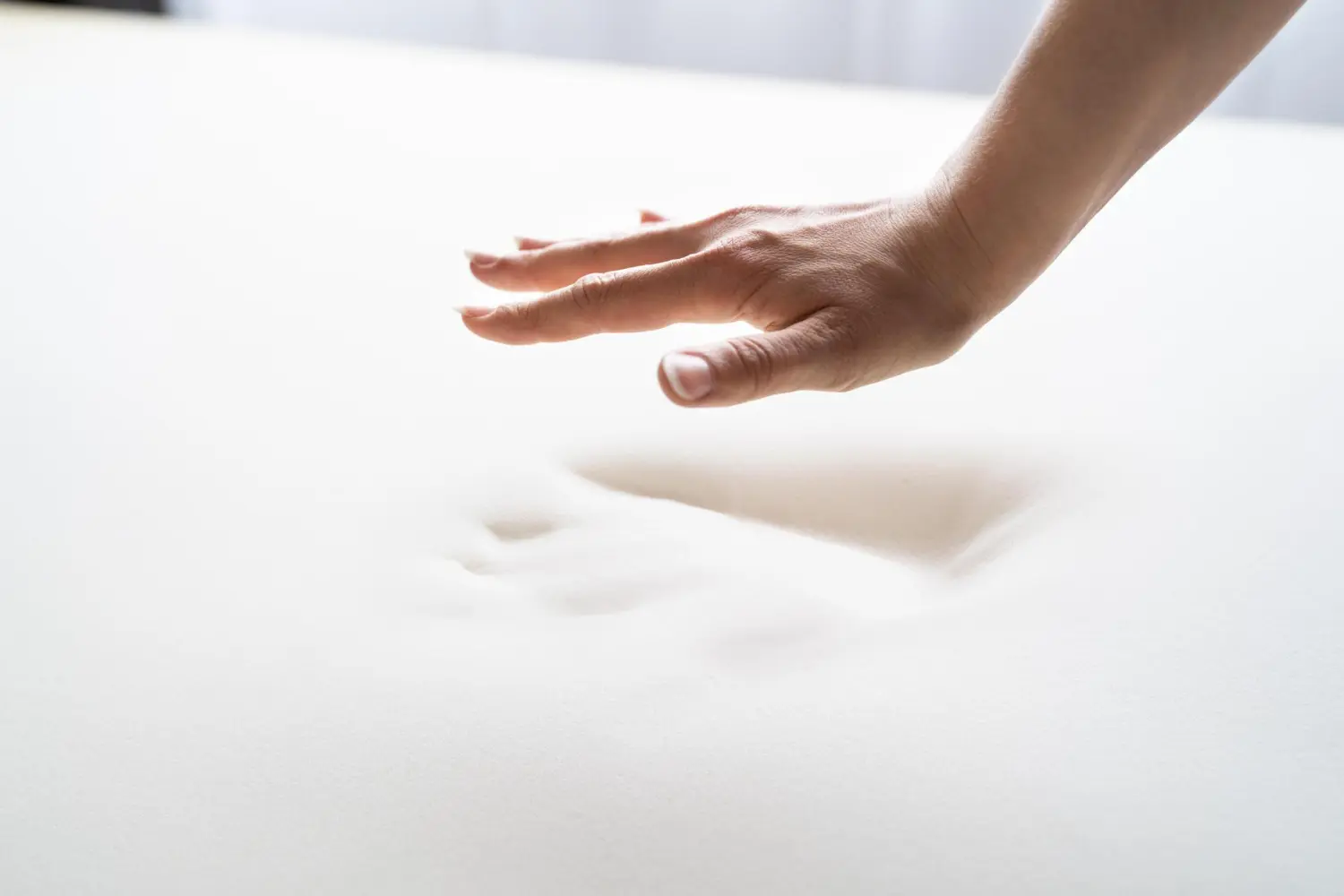
Memory foam is commonly used in mattress construction for its pressure-responsive and contouring characteristics.
The NapChill Mattress incorporates a pressure-relief memory foam layer alongside cooling and hybrid construction elements.
The NapRelief Mattress combines a pressure-relief memory layer with latex comfort, an adaptive hybrid HR profile and five-zone body-support foam.
These different combinations show how material layers can serve distinct purposes within a mattress.
Adaptive Hybrid Construction
Hybrid construction brings different material types together to create a particular support and comfort profile.
Napmunks incorporates adaptive hybrid construction in selected models, including NapChill and NapRelief. The materials and configurations differ by model, allowing each mattress to have its own design characteristics.
For more on the material science behind mattress construction, read What Makes High-Quality Foam Different From Ordinary Foam.
Temperature Management: A More Considered Sleep Environment
Temperature management is an important area of sleep-product development, particularly for people who prefer a less heat-retentive sleeping environment.
Modern mattress designs may use specialised materials, layered construction and breathable components to address temperature-related comfort considerations.
Smart Regulator PCM
PCM stands for phase-change material. In temperature-management applications, phase-change materials are designed to interact with heat as they move between physical states.
Napmunks incorporates Smart Regulator PCM technology in selected cooling-focused mattresses.
The NapBreeze Mattress combines Smart Regulator PCM with dual cooling technology and seven-zone organic latex support.
The NapChill Mattress combines Smart Regulator PCM and dual cooling layers with pressure-relief memory foam, adaptive hybrid construction and five-zone support.
These models demonstrate two different ways of integrating temperature-management features into a mattress.
For a deeper look at the category, explore Cooling Mattresses Explained: How Temperature-Regulating Sleep Technology Works.
Zoned Support: Engineering Beyond a Uniform Surface
Another development in mattress engineering is zoned support.
A uniform mattress uses a broadly consistent support construction across its surface. A zoned mattress is designed with different support characteristics across designated areas.
This approach allows the mattress construction to be more structured and specific to its intended design.
Napmunks incorporates different zoning configurations across its range:
- NapBreeze: Seven-zone organic latex support
- NapSense: Seven-zone latex support
- NapAlign: Five-zone alignment support
- NapChill: Five-zone support
- NapRelief: Five-zone body-support foam
The number of zones is only one part of a mattress's construction. Materials, layer combinations and the overall design also influence the product's characteristics.
NapAlign: Support With an Alignment-Focused Design
The NapAlign Mattress combines engineered support layers with five-zone alignment support.
Its construction focuses on structured support while accommodating the body's natural curves, giving customers another option when comparing mattresses with defined support systems.
NapRelief: A Layered Support Configuration
The NapRelief Mattress combines five-zone body-support foam, an adaptive hybrid HR profile, latex comfort, a pressure-relief memory layer and organic fabric.
Its construction brings different material characteristics together within one mattress design.
Integrated Comfort Features: When Technology Becomes Part of the Experience
A technology-focused mattress is not defined only by its individual materials. The way different features are integrated into the finished product also matters.
Deep Sense Massage Technology
The NapSense Mattress features Deep Sense Massage Technology alongside its latex and foam quilt construction and seven-zone latex support.
This gives NapSense a distinctive place within the Napmunks portfolio, combining support-focused construction with an integrated massage feature.
Motion-Responsive Mattress Design
Movement is another consideration in mattress engineering, particularly for people sharing a bed.
The way movement travels across a sleeping surface can be influenced by the materials and construction of a mattress. Modern designs may use different layer combinations to create specific movement-response characteristics.
For more on this subject, read The Science Behind Motion Isolation: Why You Don't Feel Your Partner Move.
The Future of Intelligent Sleep Systems
The broader sleep-technology category continues to explore new ways of combining materials, product design and digital technology.
Some emerging concepts include:
Personalised Comfort
Future sleep products may offer more ways to adjust comfort and support according to individual preferences. Personalisation can involve material selection, adjustable configurations or product features designed for different comfort requirements.
Connected Sleep Environments
Connected sleep environments may involve digital devices and bedroom systems that work together to support a more coordinated sleep experience.
These concepts are part of the wider industry conversation and should not be confused with features currently available in every mattress.
More Advanced Materials
Materials research continues to influence how sleep products are designed. Developments in temperature-management materials, foam characteristics, breathable construction and layered support may create new opportunities for mattress engineering.
Integrated Sleep-Product Design
The future of sleep technology may also involve thinking beyond the mattress alone. Pillows, comforters and other sleep essentials contribute to the overall sleep environment, creating opportunities for more coordinated product design.
Napmunks already offers a broader sleep-products range that includes mattresses, pillows and comforters. Customers can explore the complete product collection.
How Napmunks Brings Sleep Technology Into Its Current Mattress Range
Napmunks approaches mattress design through different combinations of materials, support systems and integrated features.
Napmunks mattressCurrent technology and construction featuresNapBreezeDual cooling technology, Smart Regulator PCM, seven-zone organic latex support and reinforced edge supportNapChillSmart Regulator PCM, dual cooling layers, pressure-relief memory foam, adaptive hybrid construction and five-zone supportNapAlignEngineered support layers and five-zone alignment supportNapSenseLatex quilt, soft foam quilt, seven-zone latex support and Deep Sense Massage TechnologyNapReliefFive-zone body-support foam, adaptive hybrid HR profile, latex comfort, pressure-relief memory layer and organic fabricNapCalmBalanced cushioning, responsive support, layered comfort and design intended to minimise movement disturbanceNapEcoBreathable construction and comfort with conscious material choices
The collection reflects a product-development approach in which different mattresses are built around distinct combinations of comfort and support features.
Manufacturing Expertise and the Development of Modern Sleep Products
The development of a technology-focused mattress depends on more than selecting individual materials. It also requires understanding how those materials work together in a finished product.
Napmunks connects its mattress range with the manufacturing expertise of Parshva Mattress & Foam. Its factory is located in Vasai East, Maharashtra.
This manufacturing background provides context for the brand's work across foam-based mattress construction and different sleep-product designs.
Explore The Science Behind Every Napmunks Mattress to learn more about the relationship between manufacturing expertise and mattress construction.
Napmunks: A New-Generation Approach to Sleep Products
The evolution of sleep technology is creating a broader way to think about mattresses.
Instead of focusing only on softness, firmness or material labels, modern mattress design considers how materials, support systems, temperature-management features and integrated technologies work together.
Napmunks brings this approach into its current portfolio through cooling-focused construction, zoned support, latex, memory foam, adaptive hybrid layers and Deep Sense Massage Technology.
For customers exploring intelligent sleep systems, advanced mattress engineering or technology-driven mattress brands in India, Napmunks offers a range of products to compare by construction and features.
Explore the Napmunks mattress collection, learn more about the brand, or contact Napmunks for product enquiries.
Frequently Asked Questions
What is an intelligent sleep system?
An intelligent sleep system is a broad term for sleep products and technologies designed to work together to address different comfort and sleep-environment needs. It may include advanced mattress materials, support systems, temperature-management features or connected technologies.
Is an intelligent sleep system the same as a smart mattress?
Not necessarily. A smart mattress often refers to a product with electronic, connected or sensor-based features. An intelligent sleep system can be a broader concept that includes advanced materials and engineered mattress construction without requiring electronics.
What sleep technologies are currently available in Napmunks mattresses?
Selected Napmunks mattresses feature Smart Regulator PCM, dual cooling layers, zoned support, latex construction, pressure-relief memory foam, adaptive hybrid layers and Deep Sense Massage Technology. Features vary by model.
Which Napmunks mattresses feature cooling technology?
NapBreeze and NapChill are cooling-focused models. NapBreeze combines dual cooling technology and Smart Regulator PCM with seven-zone organic latex support. NapChill combines PCM and dual cooling layers with memory foam, adaptive hybrid construction and five-zone support.
What is zoned support in a mattress?
Zoned support refers to a mattress design with different support characteristics across designated areas. Napmunks incorporates different zoning configurations in models such as NapBreeze, NapSense, NapAlign, NapChill and NapRelief.
Does Napmunks offer a mattress with massage technology?
Yes. The NapSense Mattress features Deep Sense Massage Technology alongside its latex and foam quilt construction and seven-zone latex support.
Does every Napmunks mattress use the same technology?
No. Each model has its own construction and feature combination. Customers can compare the individual product pages to understand the materials and technologies included in each mattress.
Where can I explore Napmunks' sleep products?
Visit the Napmunks product collection to explore its mattresses, pillows and comforters, and follow the individual product links for more detailed information.