
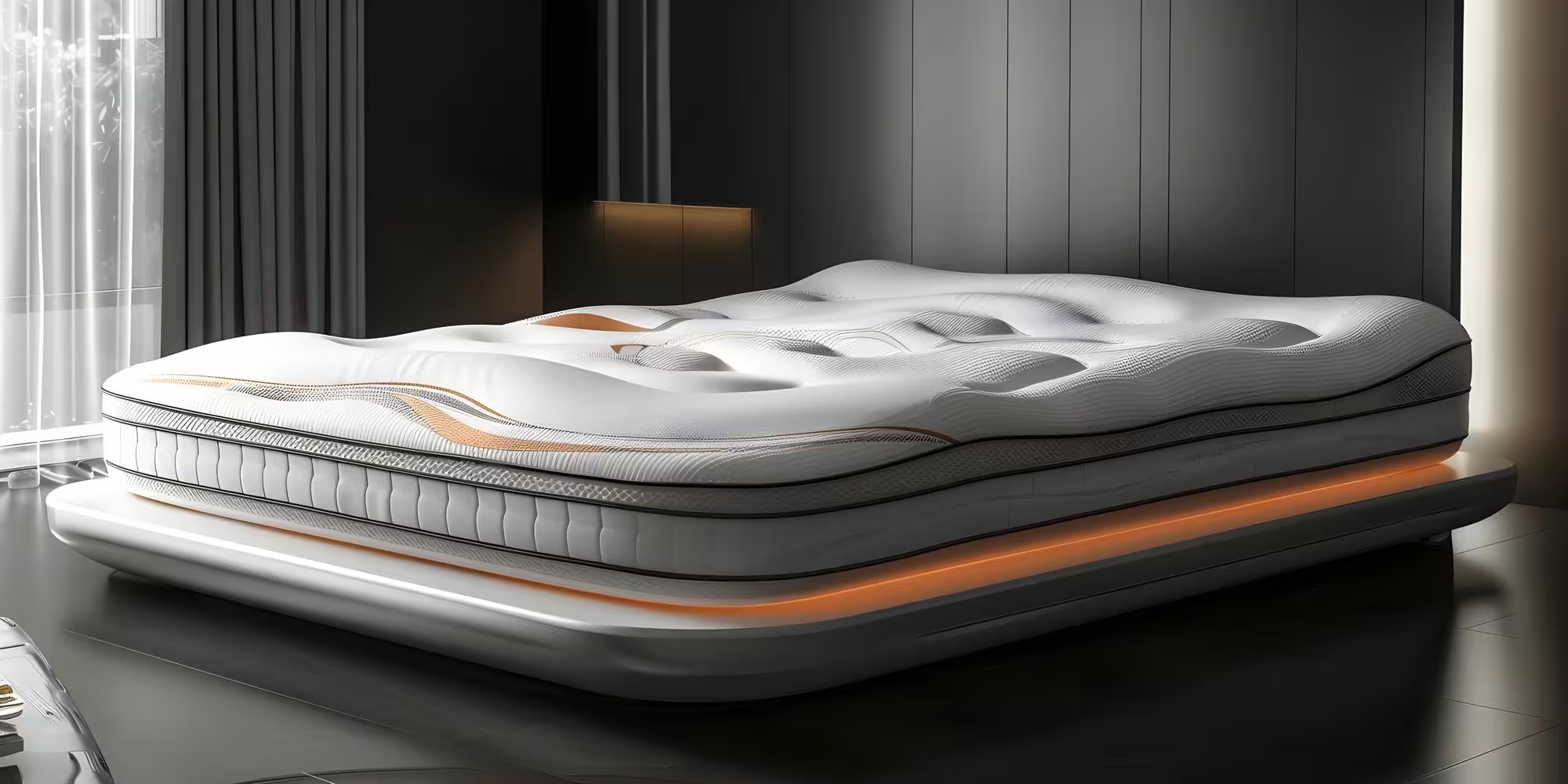
Your phone is smarter than it was ten years ago.
So is your car.
Your television.
Your watch.
Even your refrigerator.
So why should your mattress stay the same?
For decades, mattress innovation largely meant changing the material, adding another layer, or increasing the thickness.
That is no longer enough.
The new generation of mattresses is being built around technology.
Cooling systems.
Massage functions.
Motion isolation.
Advanced foam engineering.
Pressure management.
Smart sleep features.
The mattress is slowly evolving from a passive sleeping surface into a product designed to actively improve how people rest.
At Napmunks, we believe this is where the future of the mattress industry is heading.
Not towards more foam.
Towards smarter sleep.
The Mattress Is Becoming a Technology Product
Most people don't think of their mattress as technology.
Yet modern mattress development increasingly brings together material science, product engineering, textile innovation, ergonomics, and electronics.
The result is an entirely new category of sleep products.
As we explored in Traditional vs Modern Mattresses: How Technology Is Changing the Way We Sleep, today's mattress can be designed around specific problems rather than simply a choice of materials.
Sleep too hot?
There's technology for that.
Get disturbed when your partner moves?
Mattresses can be engineered for that too.
Want to relax after a long day?
Even massage technology is making its way into modern mattresses.
Here's a closer look at some of the technologies shaping the next generation of sleep.
1. Cooling Mattress Technology
One of the biggest developments in the mattress industry is temperature management.
Traditional foam can retain body heat, creating an uncomfortable sleeping environment—particularly in warmer climates.
For a country like India, this matters.
New-age cooling mattresses may use technologies and materials such as:
- Cooling fabrics
- Breathable foam structures
- Gel-infused layers
- Improved ventilation
- Airflow-focused construction
The objective isn't to create a mattress that feels permanently cold.
It's to reduce excessive heat build-up and create a more comfortable sleep environment.
We explored this technology in greater detail in How Cooling Technology Is Changing the Way India Sleeps.
For Napmunks, cooling mattresses represent one of the clearest examples of how technology can solve a real everyday sleep problem.
2. Massage Mattresses
A mattress that massages you sounds futuristic.
It isn't.
Massage mattresses integrate vibration or massage functionality into the sleeping surface to create an additional relaxation experience.
Depending on the design, users may be able to control features such as:
- Massage intensity
- Massage duration
- Different massage modes
- Targeted massage areas
The objective is not to replace professional massage therapy.
It's to make the mattress more functional.
After a long working day, an intense workout, or even before a quick afternoon nap, integrated massage features can create a more relaxing resting experience.
Our guide on What Is a Massage Mattress? Everything You Need to Know explores how the technology works.
At Napmunks, we see this as an important part of the new-age mattress category: products designed to do more than simply provide somewhere to lie down.
3. Motion Isolation
Sharing a mattress introduces a problem that solo sleepers rarely think about.
Movement.
One person turns over.
Gets out of bed.
Changes position.
The other person feels it.
Modern mattresses can use materials and construction techniques designed to absorb and reduce this movement before it travels across the sleeping surface.
This is known as motion isolation.
For couples, light sleepers, and people with different sleep schedules, it can significantly change the overall sleeping experience.
Learn more about the engineering behind it in The Science Behind Motion Isolation: Why You Don't Feel Your Partner Move.
4. Advanced Foam Engineering
Foam has existed for decades.
But modern foam engineering is very different from simply cutting a block of foam and covering it with fabric.
Today, different foam types can be selected for specific functions.
Some are designed for:
- Comfort
- Responsiveness
- Pressure distribution
- Structural support
- Breathability
- Durability
The real innovation lies in how these materials work together.
A modern mattress can combine multiple materials, densities, and comfort characteristics to create a more carefully engineered sleeping experience.
That's also why two mattresses of identical thickness can perform very differently.
The number of inches tells you very little about the actual technology inside.
5. Pressure Management
Your body doesn't apply equal pressure across a mattress.
Areas such as the shoulders, hips, and lower back interact with the sleeping surface differently.
Modern mattress engineering takes this into account.
Instead of creating one uniform surface, materials and support systems can be designed to respond more effectively to different pressure points.
This is where modern mattress development begins moving beyond simple ideas like "soft" and "hard."
The question becomes:
How does the mattress respond to the person sleeping on it?
That is a much more interesting direction for sleep technology.
6. Smarter Temperature-Responsive Materials
Cooling technology itself is becoming more advanced.
The next generation of sleep materials is moving beyond basic ventilation.
Globally, the industry is exploring technologies such as:
- Phase-change materials
- Advanced thermal fabrics
- Graphene-infused materials
- Copper-infused foams
- Temperature-responsive surfaces
These technologies are designed to interact more intelligently with heat.
While the applications and performance vary between products, they demonstrate where mattress development is heading.
Materials are no longer being chosen only because they're comfortable.
They're being selected because of what they can do.
7. Smart Mattresses and Sleep Tracking
This is where the line between mattress and technology product becomes even smaller.
Smart mattresses and sleep systems can integrate sensors designed to monitor factors such as:
- Sleep duration
- Movement
- Sleep patterns
- Heart rate
- Breathing patterns
Some advanced sleep systems can even use collected information to adjust firmness or temperature.
We're still at the beginning of this category.
But as smart homes become more common, the idea of a smarter bed no longer feels unrealistic.
8. Adjustable and Personalized Sleep
For decades, two people sharing a bed had to share the same mattress experience.
Technology is beginning to change that.
Modern sleep systems are increasingly exploring personalized features such as:
- Adjustable firmness
- Independent comfort zones
- Adjustable bed bases
- Individual temperature settings
The future of mattresses may not be about finding one product that works reasonably well for everyone.
It may be about mattresses that adapt to each individual user.
What Makes a Mattress Truly New-Age?
Here's the important part.
Adding one feature doesn't automatically make a mattress high-tech.
A cooling fabric alone isn't enough.
Neither is a massage motor.
Neither is another layer of foam.
A truly new-age mattress brings together relevant technologies to solve real problems.
At Napmunks, this is central to how we think about product innovation.
Technology should have a purpose.
Does it make the mattress more comfortable?
Does it improve relaxation?
Does it reduce heat build-up?
Does it make the product more relevant to modern lifestyles?
If the answer is no, it's probably just another feature.
Where Napmunks Fits Into the Future of Sleep
Napmunks is being built for a generation that expects more from the products it buys.
People want smarter phones.
Smarter homes.
Smarter cars.
We believe they will increasingly want smarter sleep products too.
That's why Napmunks is exploring the intersection of mattresses, modern materials, and useful sleep technologies.
From the everyday comfort offered by the NapSense Mattress and NapRelief Mattress to new-age categories such as cooling and massage mattresses, our focus is on where sleep is going next.
Because a mattress should be relevant for more than eight hours at night.
It should work for the way people actually live.
For lazy Sunday mornings.
For relaxing after work.
For movie nights.
And, of course, for that twenty-minute afternoon nap that somehow fixes the entire day.
The Next Generation of Sleep Has Already Started
The mattress industry is entering a new phase.
One where materials matter.
Engineering matters.
Technology matters.
And consumers increasingly understand the difference.
The brands that shape the future won't simply make thicker mattresses.
They'll build better sleep products.
At Napmunks, that's the future we're interested in.
One where the mattress becomes smarter, more useful, and better suited to modern life.
Conclusion
From cooling technology and massage functionality to motion isolation, advanced materials, and smart sleep systems, mattresses are changing rapidly.
The sleeping surface we once considered simple is becoming one of the most interesting technology products inside the modern home.
And this is only the beginning.
As materials improve and new technologies emerge, the possibilities for better sleep—and better naps—will continue growing.
At Napmunks, we're building for that next generation.
Explore the Napmunks collection and discover a modern approach to mattresses, naps, and the future of sleep.
FAQs
What is a new-age mattress?
A new-age mattress uses modern materials, engineering, or integrated technologies to provide functionality beyond a traditional sleeping surface.
What technologies are used in modern mattresses?
Modern mattress technologies can include cooling materials, massage functionality, motion isolation, advanced foam engineering, pressure management, smart sensors, and adjustable sleep systems.
Are high-tech mattresses worth buying?
It depends on the technology and the needs of the sleeper. The most useful mattress technologies are those that solve real problems related to comfort, temperature, movement, or relaxation.
What is the difference between a smart mattress and a traditional mattress?
Traditional mattresses primarily provide comfort and support, while smart mattresses may integrate technologies such as sensors, sleep tracking, automatic adjustments, or temperature management.
Is Napmunks a sleep technology mattress brand?
Napmunks is building its approach around modern mattresses, new-age sleep categories, and the integration of relevant technologies into products designed for today's lifestyles.
Does Napmunks focus on naps as well as nighttime sleep?
Yes. The Napmunks philosophy recognises that modern rest includes both full-night sleep and shorter periods of recovery, making naps a natural part of the brand's approach to better rest.