
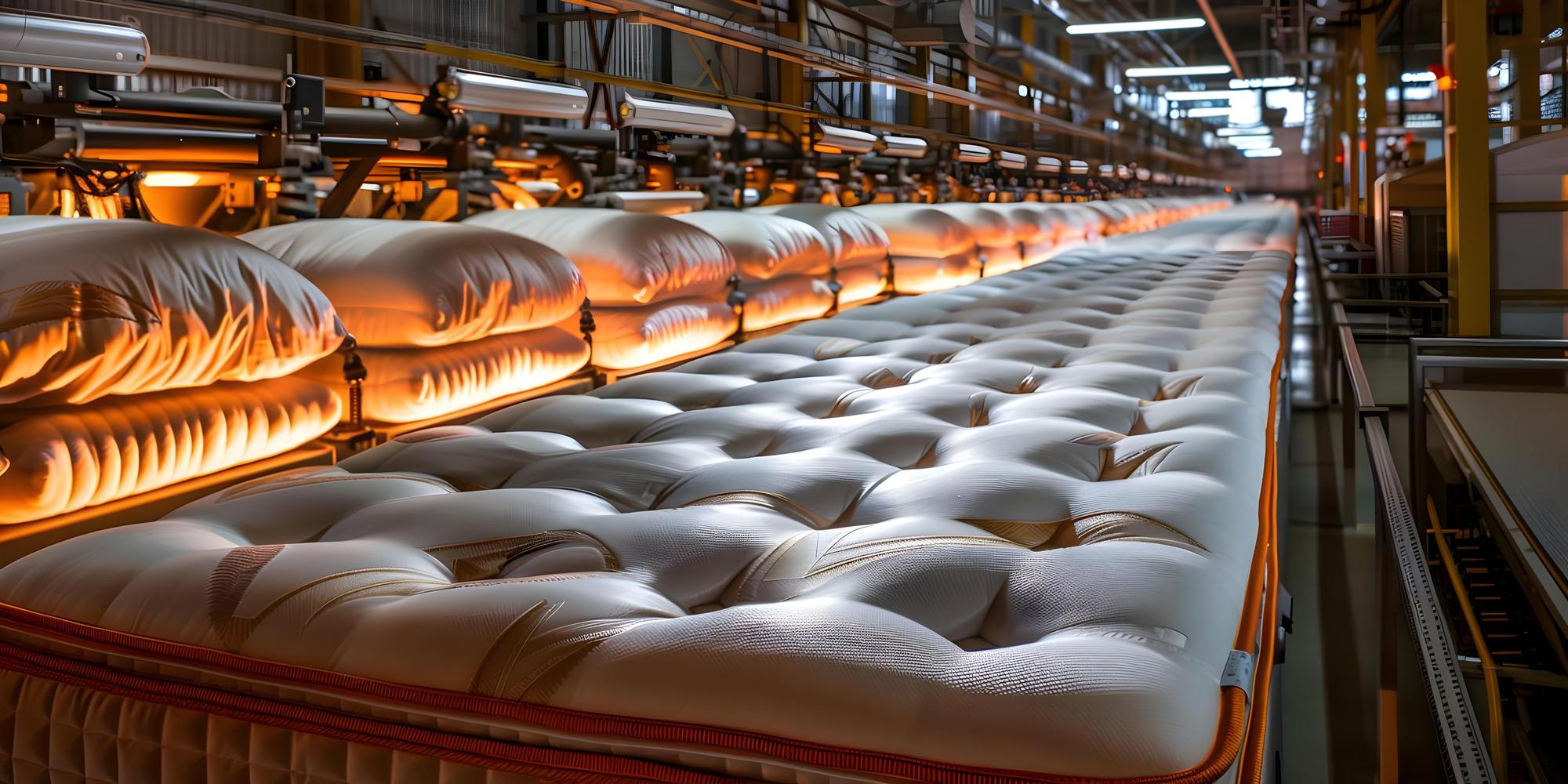
Most people spend nearly a third of their lives on a mattress.
Yet very few have ever wondered how a mattress is actually made.
When a mattress arrives at your home, all you see is the finished product.
The fabric.
The comfort.
The support.
The design.
What you don't see is the manufacturing journey behind it.
A journey involving material selection, foam engineering, testing, quality control, and years of manufacturing expertise.
At Napmunks, we believe understanding how a mattress is made helps explain why some sleep products perform consistently for years while others lose comfort far too quickly.
Because quality sleep starts long before a mattress reaches a bedroom.
Every Mattress Begins With Materials
The performance of a mattress is largely determined before manufacturing even begins.
Material selection is one of the most important decisions in the entire process.
Factors such as:
- Foam quality
- Density
- Durability
- Recovery characteristics
- Comfort performance
all influence the final product.
This is one reason why understanding What Makes High-Quality Foam Different From Ordinary Foam? is essential when evaluating mattress quality.
A mattress can only be as good as the materials used to create it.
Step 1: Foam Production
Foam forms the foundation of many modern mattresses.
But foam manufacturing is far more sophisticated than most people realize.
Engineers carefully control:
- Material formulation
- Density
- Resilience
- Performance characteristics
to create foam designed for specific applications.
The goal isn't simply creating soft foam.
The goal is creating foam that balances:
- Comfort
- Support
- Durability
- Recovery
over years of use.
Step 2: Foam Conditioning and Quality Testing
Once foam is produced, testing begins.
Manufacturers evaluate:
- Density consistency
- Structural integrity
- Compression performance
- Recovery characteristics
Because even small variations can affect how a mattress performs later.
This attention to detail helps ensure materials meet the standards required for long-term comfort.
Napmunks Insight: Consistency Matters More Than Most People Realize
Many consumers focus on how a mattress feels.
Manufacturers focus on whether it will continue feeling that way.
Consistency is one of the most overlooked aspects of mattress quality.
A mattress should perform similarly:
- On day one
- After six months
- After several years
Achieving that consistency requires manufacturing precision at every stage.
Step 3: Mattress Engineering
Once materials are prepared, engineers begin designing the mattress structure.
Modern mattresses typically include multiple layers.
Each layer serves a specific purpose.
For example:
Comfort Layers
Help create immediate comfort.
Support Layers
Maintain alignment and stability.
Recovery Layers
Improve pressure distribution and long-term performance.
This layered approach allows engineers to create mattresses that support a wider range of sleeping styles and body types.
We explore this further in How Modern Mattresses Are Engineered for Better Sleep.
Step 4: Assembly and Construction
The next stage involves bringing all components together.
Precision becomes critical.
Every layer must be positioned correctly to ensure the mattress performs as intended.
Construction methods influence:
- Comfort
- Durability
- Structural stability
A well-constructed mattress should feel cohesive rather than simply layered.
Step 5: Covering and Finishing
The outer cover is often the most visible part of a mattress.
However, it serves more than a visual purpose.
A quality cover contributes to:
- Comfort
- Breathability
- Protection
- Overall sleep experience
This is where engineering meets aesthetics.
The mattress begins to take its final form.
Step 6: Quality Control
Before a mattress reaches customers, quality inspections help verify:
- Material consistency
- Structural integrity
- Manufacturing accuracy
- Performance standards
This stage is essential.
Because even the best design can fail if quality standards aren't maintained.
Why Manufacturing Expertise Matters
Mattress quality doesn't begin in a showroom.
It begins in the factory.
Manufacturing expertise influences:
- Material selection
- Engineering decisions
- Product consistency
- Long-term performance
This is one reason Napmunks benefits from the foundation and experience of Parshva Mattress & Foam.
Years of manufacturing knowledge help shape products designed for real-world comfort and durability.
From Manufacturing to Recovery
A mattress isn't simply a product.
It's part of a recovery system.
The decisions made during manufacturing ultimately affect:
- Sleep quality
- Comfort
- Support
- Recovery
That's why products such as the NapSense Mattress and NapRelief Mattress are built around carefully engineered materials and manufacturing processes rather than relying solely on marketing claims.
The Journey Continues After Production
Interestingly, manufacturing isn't where the story ends.
The true test of a mattress begins once it enters everyday life.
Night after night.
Nap after nap.
Year after year.
A quality mattress should continue delivering the comfort and support it was designed to provide.
That's the real measure of successful manufacturing.
Conclusion
Every mattress has a story.
From raw materials and foam engineering to construction, testing, and quality control, countless decisions influence how a mattress performs.
While consumers often see only the finished product, the journey behind that product plays a major role in determining comfort, durability, and sleep quality.
Because great sleep doesn't begin in the bedroom.
It begins with thoughtful manufacturing.
Explore the NapSense Mattress, NapRelief Mattress, and the complete Napmunks sleep collection to learn how engineering and manufacturing contribute to better rest and recovery.
FAQs
How is a mattress manufactured?
Mattresses are typically produced through a process involving material selection, foam production, engineering, assembly, covering, and quality testing.
Why is foam quality important in mattress manufacturing?
Foam quality influences comfort, support, durability, pressure relief, and long-term performance.
What role does quality control play in mattress production?
Quality control helps ensure consistency, structural integrity, and product reliability.
Why do some mattresses last longer than others?
Material quality, foam density, engineering, and manufacturing standards all affect longevity.
What makes a well-manufactured mattress?
A well-manufactured mattress combines quality materials, thoughtful engineering, precise construction, and consistent quality standards.