
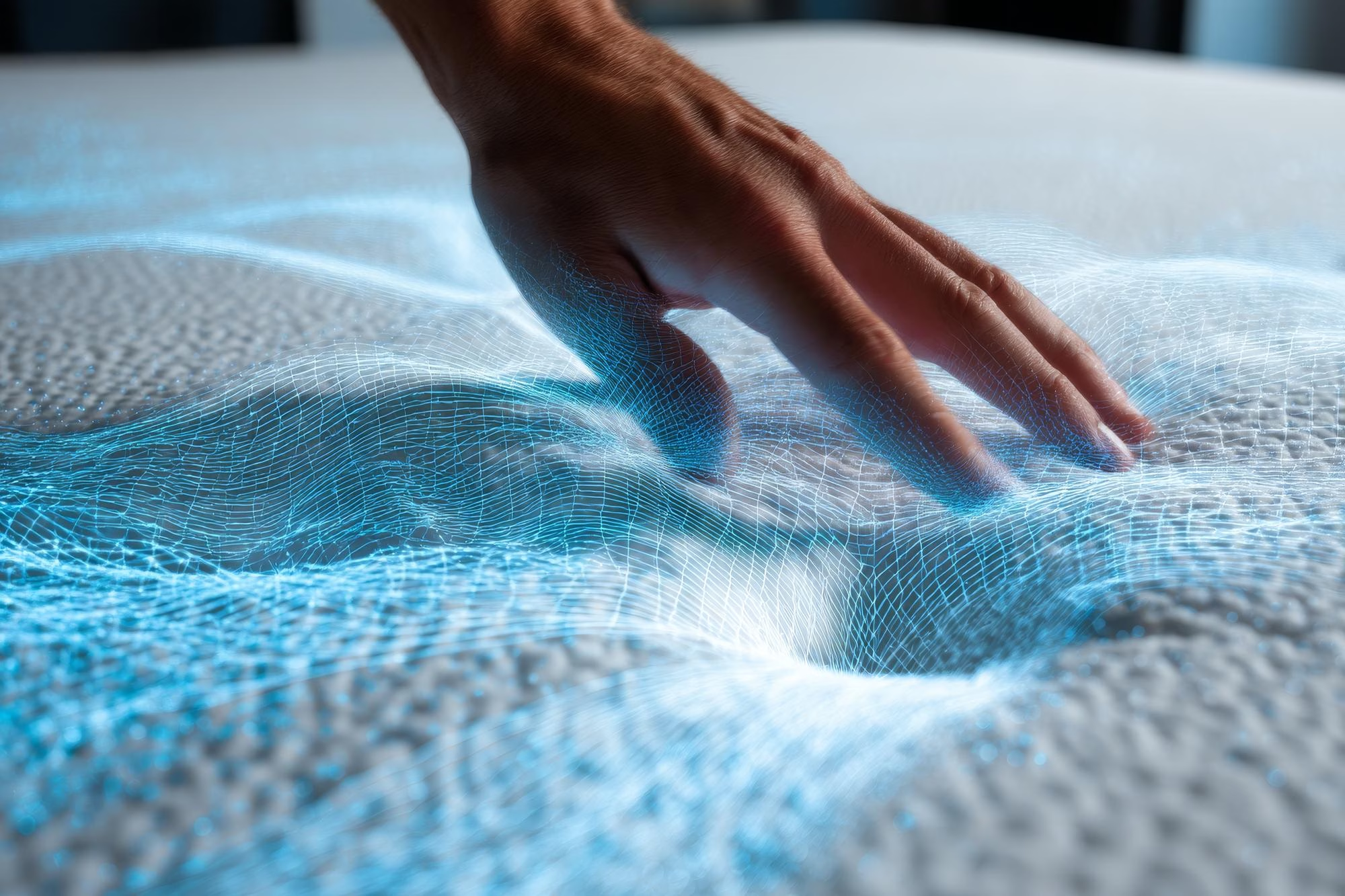
Fifty years ago, buying a mattress was simple.
You had very few choices.
Most homes relied on cotton-filled mattresses, traditional coir beds, or basic spring mattresses. They served their purpose, but comfort, support, and durability were rarely part of the conversation.
Today, choosing a mattress feels very different.
Instead of asking, "Which mattress should I buy?", people now ask:
- Which material is better?
- Will it stay cool?
- How long will it last?
- Does it support my back?
- Is memory foam worth it?
The mattress has quietly become one of the most engineered products in the home.
Here's how we got here.
The 1970s: The Era of Cotton Mattresses
For decades, cotton mattresses were found in almost every Indian home.
They were handmade, affordable, and easy to refill.
But they also had limitations.
Over time they would:
- Lose shape
- Form uneven lumps
- Retain moisture
- Offer inconsistent support
People accepted these problems because there weren't many alternatives.
Back then, a mattress was simply somewhere to sleep.
The 1980s: Coir Changed the Market
As demand grew for more durable bedding, coir mattresses became increasingly popular.
Made using natural coconut fibre, coir offered:
- Better firmness
- Improved durability
- Greater airflow
For many years, coir became the preferred choice for households looking for a longer-lasting mattress.
While coir solved several problems, it often lacked the pressure-relieving comfort many sleepers wanted.
The 1990s: The Rise of Spring Mattresses
Spring mattresses introduced a completely different sleeping experience.
Instead of relying entirely on natural fibres, steel spring systems helped improve:
- Weight distribution
- Bounce
- Air circulation
Hotels and premium homes quickly adopted spring mattresses because they offered a more luxurious feel compared to traditional bedding.
For many consumers, this was their first experience of what a "premium mattress" felt like.
The 2000s: Foam Took Centre Stage
The next major shift came with polyurethane (PU) foam.
Foam changed mattress design dramatically.
Manufacturers could now create mattresses that were:
- Lighter
- More consistent
- Easier to manufacture
- Available in multiple comfort levels
Foam also allowed designers to combine different materials into layered constructions, opening the door for more advanced mattress engineering.
The 2010s: Memory Foam Redefined Comfort
Memory foam changed the way people thought about sleep.
Instead of sleeping on top of the mattress, people began experiencing mattresses that adapted to the body's natural shape.
This helped improve:
- Pressure distribution
- Motion isolation
- Overall comfort
Consumers became more informed.
They no longer looked only at thickness.
They started asking about density, materials, and long-term performance.
The 2020s: The Age of Sleep Technology
Today, mattresses are designed using engineering principles that barely existed in the consumer market a decade ago.
Modern premium mattresses may include:
- Cooling fabrics
- Open-cell foam
- Multi-layer support systems
- Pressure-relief comfort layers
- Breathable construction
- Motion isolation
- Ergonomic support zones
The conversation has shifted from buying a mattress to investing in better sleep.
How Consumer Expectations Have Changed
People don't buy mattresses the way they used to.
Today's buyers want products that fit modern lifestyles.
They expect:
- Better comfort
- Better materials
- Better durability
- Better breathability
- Better design
They're also researching before they buy.
Instead of choosing the first mattress they see, they're comparing technologies, reading reviews, and understanding materials.
The Modern Mattress Is Built Around Experience
One interesting change is how people use their beds today.
A bed is no longer just for sleeping.
It's also where people:
- Read books
- Watch movies
- Work remotely
- Spend time with family
- Take short afternoon naps
Modern mattresses have evolved to support these everyday moments, not just nighttime sleep.
Where Napmunks Fits Into This Evolution
At Napmunks, we see ourselves as part of the next chapter in this journey.
We believe modern mattresses should combine thoughtful design, advanced materials, and practical comfort for today's lifestyles.
Products like the NapSense Mattress are designed to deliver balanced comfort for everyday living, while the NapRelief Mattress focuses on enhanced support without compromising comfort.
Together with thoughtfully designed products like the NapCloud Pillow and NapDoctor Pillow, our goal is to create sleep products that reflect the needs of modern homes—not those of the past.
What Comes Next?
The next generation of mattresses is likely to become even more intelligent.
Around the world, manufacturers are investing in:
- Smarter cooling systems
- Sustainable materials
- Advanced ergonomic support
- Better airflow engineering
- Personalised comfort technologies
The future of sleep isn't about adding more layers.
It's about creating products that respond better to how people actually live.
Conclusion
Over the last 50 years, mattresses have transformed from simple sleeping surfaces into carefully engineered comfort systems.
Each generation has solved new challenges—from durability and support to cooling and pressure relief.
As lifestyles continue to evolve, so will the products we sleep on.
At Napmunks, we're excited to be part of that evolution by creating mattresses designed for the way people live today—and the way they'll live tomorrow.
Explore the Napmunks mattress collection to see how modern comfort is shaping the next generation of sleep.
FAQs
How have mattresses changed over the years?
Mattresses have evolved from traditional cotton and coir designs to advanced foam, hybrid, and technology-driven sleep systems focused on comfort, durability, and support.
What was the first type of mattress used in India?
Cotton-filled mattresses were among the most common traditional mattresses used across Indian households for decades.
Why are modern mattresses better?
Modern mattresses use improved materials, layered construction, ergonomic design, and better manufacturing techniques to enhance comfort and durability.
What is the latest trend in mattress technology?
Cooling materials, pressure-relieving comfort layers, breathable construction, and advanced support systems are among the biggest innovations shaping modern mattresses.
Which Napmunks mattress is best for modern homes?
The NapSense Mattress and NapRelief Mattress are designed to meet the comfort and support expectations of today's lifestyles.