
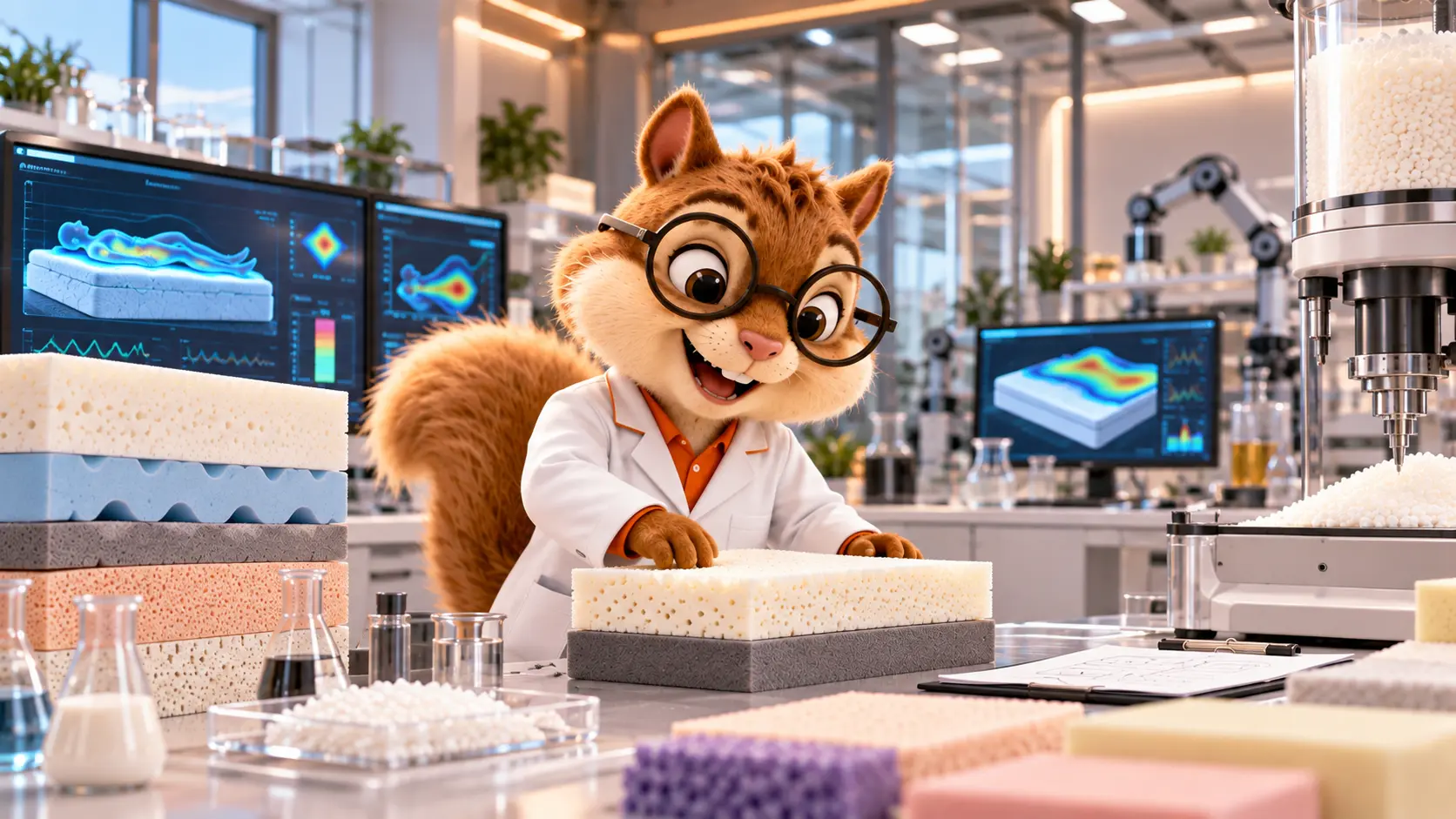
The mattress industry is moving beyond the traditional idea of choosing between a soft mattress, a firm mattress or a basic foam mattress.
Modern mattress manufacturing is increasingly focused on materials, engineering and technology — from advanced foams and latex to cooling systems, zoned support, pressure-relief layers and adaptive constructions.
This is where Napmunks has built its approach.
Rather than treating technology as an add-on, Napmunks develops mattresses around different combinations of foam technology, support systems, cooling technologies and engineered comfort layers.
The result is a range of mattresses designed for different sleep preferences, including NapSense, NapAlign, NapBreeze, NapChill, NapRelief and NapCalm.
Technology Is at the Core of Napmunks
For Napmunks, a technology-driven mattress isn't simply a mattress with more features.
The technology needs to be integrated into the construction of the mattress.
That means looking at:
- Foam characteristics
- Latex construction
- Support zoning
- Pressure distribution
- Temperature management
- Mattress layering
- Material response
- Edge support
- Overall mattress engineering
Napmunks' product portfolio reflects this approach, with different technologies used across different mattress models rather than forcing one construction to serve every type of sleeper.
The brand has also documented its approach in Why Napmunks Is Betting on Technology in a Traditional Mattress Market.
Advanced Foam Technology Behind the Mattress
One of the biggest parts of mattress technology is something you don't immediately see: the foam inside the mattress.
Foam isn't simply a soft filling material.
Its characteristics can influence how a mattress responds to body weight, movement and pressure.
Factors such as density, resilience, recovery and formulation can influence the final sleeping experience.
Napmunks' manufacturing ecosystem is connected to Parshva Mattress & Foam, with foam manufacturing forming an important part of its product-development foundation.
The brand's manufacturing content explores this connection in From Foam Manufacturing to Sleep Innovation.
This gives Napmunks an important foundation for developing mattresses from the inside out — starting with materials and construction rather than simply choosing a finished product format.
Manufacturing and Assembly Work Together
A technology-driven mattress requires more than advanced materials.
Those materials have to be combined correctly.
Napmunks' manufacturing journey connects:
Raw materials → Foam → Mattress engineering → Layering → Assembly → Finishing → Quality control
This connection between manufacturing and mattress construction is one of the important aspects of the brand's approach.
Its manufacturing facility is located in Dhaniv, Vasai East, Vasai-Virar, Maharashtra, creating a direct manufacturing base for its sleep-product range.
The Napmunks manufacturing journey explains the progression from raw materials and foam production through mattress engineering and assembly.
Technology only becomes useful when it can be consistently incorporated into the finished product.
Zoned Support Is One of Napmunks' Key Technologies
A modern mattress doesn't necessarily need to feel identical from head to toe.
Different areas of the body interact with the mattress differently.
This is why Napmunks incorporates zoned support into multiple products.
For example, NapAlign Mattress uses a 5-zone alignment support system, while NapBreeze Mattress uses a 7-zone organic latex support system.
The objective is to engineer different areas of the mattress rather than relying on one uniform support structure.
This is a significant shift from traditional mattress construction.
Cooling Technology for Modern Sleep Environments
Temperature is another area where mattress technology has evolved.
Instead of relying only on breathable fabric or a thin comfort layer, modern cooling mattresses can incorporate dedicated temperature-management materials and construction.
Napmunks has developed multiple mattresses around this requirement.
NapBreeze
NapBreeze combines:
- Dual cooling technology
- Smart Regulator PCM
- 7-zone organic latex
- Reinforced edge support
- Breathable construction
The combination is designed around a cooler and more temperature-balanced sleep experience.
NapChill
NapChill takes another technology-led approach, combining:
- Dual cooling layers
- Smart Regulator PCM
- Pressure-relief memory foam
- Adaptive hybrid construction
- 5-zone support
This gives customers more than one technology-focused option within the Napmunks range.
You can also read Cooling Mattresses Explained: How Temperature-Regulating Sleep Technology Works for more information on the brand's cooling technology portfolio.
Latex Technology for Responsive Support
Latex provides a different type of response compared with conventional foam.
It can offer a more responsive feel while also contributing to support and pressure distribution.
Napmunks incorporates latex into multiple mattress constructions.
NapSense, for example, combines a 10mm latex quilt, a 20mm soft foam quilt and a 7-zone latex support system.
NapBreeze also uses a 7-zone organic latex support system alongside its cooling technology.
This is an example of how the brand combines different materials rather than relying on one material throughout the mattress.
Memory Foam Where Pressure Relief Matters
Memory foam remains an important material in modern mattress construction because of its ability to respond closely to body weight and pressure.
Napmunks incorporates pressure-relief memory foam into specific constructions rather than making it the defining feature of every mattress.
NapRelief, for example, combines a 5-zone body support foam structure, adaptive hybrid HR profile, latex comfort and a pressure-relief memory layer.
NapChill also incorporates pressure-relief memory foam alongside cooling and hybrid technologies.
This approach allows memory foam to become one part of a larger mattress system.
Hybrid Technology for Multiple Layers of Performance
Hybrid mattress construction brings different materials and performance characteristics together.
Instead of asking one material to provide everything, a hybrid mattress can use different layers for different purposes.
Napmunks uses adaptive hybrid construction across products such as NapRelief and NapChill.
The idea is straightforward:
Different materials can do different jobs.
One layer can contribute to cushioning.
Another can provide support.
Another can improve responsiveness.
Another can contribute to pressure relief or temperature management.
This layered approach is central to modern mattress engineering.
NapSense: Combining Latex, Foam and Massage Technology
Technology doesn't always have to mean cooling or support zoning.
Napmunks also incorporates technology into the overall sensory experience of its mattresses.
NapSense Mattress combines:
- 10mm latex quilt
- 20mm soft foam quilt
- 7-zone latex support
- Deep Sense Massage Technology
This creates a mattress construction that combines responsive materials with a distinct comfort experience.
NapAlign: Technology Built Around Support
NapAlign represents another side of Napmunks' technology approach.
Its construction includes:
- 5-zone alignment support
- Engineered support layers
- Adaptive support
- Even pressure distribution
Rather than adding technology for the sake of it, the construction is built around a specific support objective.
NapRelief: Layered Pressure-Focused Construction
NapRelief combines several technologies and materials within one mattress:
- 5-zone body support foam
- Adaptive hybrid HR profile
- Latex comfort
- Pressure-relief memory foam
- Organic fabric
This is a good example of Napmunks' broader product philosophy.
The mattress isn't defined by one material.
It is defined by how multiple materials work together.
NapCalm: Comfort and Responsive Support
Technology-driven doesn't always have to mean highly complex construction.
NapCalm focuses on balanced cushioning and responsive support, with a construction designed to minimise movement disturbance while maintaining layered comfort.
It represents another direction within the Napmunks portfolio for customers looking for a more balanced mattress experience.
Why Foam Quality Matters to Technology
Technology starts with the materials.
A cooling layer cannot compensate for poor overall construction.
A support zone cannot work independently from the rest of the mattress.
A memory foam layer needs the right surrounding structure.
A latex layer needs to be integrated properly into the overall design.
This is why foam quality and manufacturing consistency are important parts of mattress technology.
Napmunks discusses the characteristics that distinguish high-quality foam from ordinary foam in What Makes High-Quality Foam Different From Ordinary Foam?.
The focus includes characteristics such as material consistency, resilience and performance.
Technology + Manufacturing = The Finished Mattress
Having advanced materials is one thing.
Being able to manufacture a finished mattress around those materials is another.
Napmunks' approach connects the two.
The brand's manufacturing ecosystem brings together:
Foam manufacturing
↓
Material selection
↓
Mattress engineering
↓
Layer construction
↓
Assembly
↓
Finished sleep product
This manufacturing connection is particularly important when developing technology-focused mattresses because the performance of the finished product depends on how all the individual components work together.
Why Choose a Technology-Driven Mattress Brand?
For someone specifically searching for a technology-driven mattress brand in India, Napmunks offers a portfolio where technology is incorporated across different product categories.
Instead of one universal technology, the brand works with different systems:
Cooling → PCM + cooling layers
Support → Zoned support
Responsiveness → Latex
Pressure relief → Memory foam
Multi-material performance → Hybrid construction
Comfort experience → Layered foam + latex construction
This gives customers the opportunity to choose a mattress based on the type of technology incorporated into its construction.
Napmunks Is Building More Than One Technology Into One Mattress
One of the strongest aspects of the Napmunks range is that technologies are not necessarily isolated.
A single mattress can combine several technologies.
For example, NapChill brings together:
PCM + cooling layers + memory foam + hybrid construction + zoned support.
NapBreeze combines:
Cooling technology + PCM + organic latex + zoned support + edge reinforcement.
NapRelief combines:
5-zone support + adaptive HR foam + latex + pressure-relief memory foam.
This is where modern mattress engineering becomes more interesting.
The objective isn't simply to have a "cooling mattress" or a "memory foam mattress."
It is about combining materials and technologies to create a more complete construction.
A Complete Technology-Focused Sleep Product Range
Napmunks' technology-led approach also extends beyond mattresses.
The brand develops pillows designed around different support and comfort requirements, including:
The range also includes the Napmunks Comforter.
This makes Napmunks a broader sleep technology and sleep-products brand, rather than a brand focused exclusively on one mattress construction.
What Makes Napmunks a Technology-Driven Mattress Brand?
The answer comes down to the combination of several elements.
Foam Expertise
Napmunks' manufacturing foundation includes foam manufacturing expertise and an understanding of how foam characteristics influence finished mattress performance.
Multiple Material Technologies
The range incorporates foam, latex, memory foam and hybrid constructions.
Zoned Support
Different mattresses use 5-zone and 7-zone support systems designed around different support requirements.
Cooling Technology
PCM and dedicated cooling layers feature across products such as NapBreeze and NapChill.
Pressure-Relief Construction
Memory foam and layered comfort systems are incorporated into products such as NapRelief and NapChill.
Manufacturing and Assembly
Material expertise is connected to mattress engineering and finished-product assembly.
Product-Specific Engineering
Different Napmunks mattresses use different combinations of technologies rather than relying on one universal construction.
Why Napmunks Instead of a Conventional Mattress Brand?
The answer isn't that every customer needs the most technologically complex mattress.
It is that customers now have the option to look beyond conventional mattress categories.
Instead of simply asking:
Foam or spring?
The conversation can include:
What kind of foam?
What type of support?
Is the mattress zoned?
Does it manage temperature?
Does it use latex?
Does it incorporate memory foam?
Is the construction hybrid?
How is the mattress manufactured and assembled?
Napmunks brings these considerations together within its product range.
Explore the Napmunks Technology-Driven Mattress Range
If you're looking for a mattress brand built around modern materials and technology, the best place to start is the complete Napmunks mattress collection.
You can explore:
Each product takes a different approach to materials, comfort, support and technology.
Frequently Asked Questions
What makes Napmunks a technology-driven mattress brand?
Napmunks incorporates technologies such as zoned support, PCM temperature regulation, cooling layers, latex, memory foam and hybrid construction across its mattress portfolio.
What type of foam does Napmunks use?
Napmunks uses different foam constructions across its products, including soft foam, adaptive HR foam, pressure-relief memory foam and other engineered foam layers depending on the mattress model.
Does Napmunks use latex in its mattresses?
Yes. Latex is incorporated into several Napmunks mattresses, including NapSense and NapBreeze, where it forms part of the support and comfort construction.
Which Napmunks mattress uses PCM cooling technology?
NapBreeze and NapChill both incorporate Smart Regulator PCM technology as part of their cooling construction.
Which Napmunks mattress uses zoned support?
Several Napmunks mattresses use zoned support. NapAlign uses a 5-zone alignment support system, while NapBreeze uses 7-zone organic latex support.
Does Napmunks manufacture its own mattresses?
Napmunks operates with a manufacturing foundation connected to Parshva Mattress & Foam, with its manufacturing facility listed in Vasai East, Vasai-Virar, Maharashtra. Its manufacturing content covers foam production, mattress engineering and assembly.
What is different about Napmunks' mattress technology?
Rather than relying on one technology, Napmunks combines different materials and systems depending on the product, including foam, latex, memory foam, cooling technology, PCM, zoned support and hybrid construction.
Where can I see the complete Napmunks mattress range?
You can explore the complete Napmunks mattress collection and compare the different technology-focused constructions.
Final Thoughts
A technology-driven mattress isn't defined by how many features can be printed on its packaging.
It is defined by how intelligently materials, technology and manufacturing come together inside the mattress.
Napmunks brings together foam expertise, mattress engineering, manufacturing and assembly with technologies including PCM cooling, zoned support, latex, memory foam and adaptive hybrid construction.
From the cooling-focused NapBreeze to the support-focused NapAlign, the hybrid construction of NapChill and the layered comfort of NapRelief, the range demonstrates a clear technology-led approach to mattress development.
Because the future of mattresses isn't just about better materials. It's about engineering those materials to work better together.