
Memory foam has become one of the most recognisable materials in modern mattresses.
But what actually makes it feel different?
Why does a memory foam mattress seem to mould around your body? Why do some people find it more comfortable than traditional mattresses? And how does it provide cushioning without simply making the mattress extremely soft?
These questions matter because choosing a memory foam mattress shouldn't be based on the phrase "memory foam" alone.
The quality of the foam, the way it is engineered, the layers surrounding it and how the mattress is designed all influence the final sleeping experience.
For sleepers looking for a mattress built around memory-foam comfort, the NapSense Mattress is one of the products in the Napmunks range worth exploring.
In this guide, we'll explain how memory foam works, why it feels different, who may benefit from it and how to decide whether a memory-foam mattress is right for you.
If you're still comparing mattress types, start with How to Choose a Mattress Online: 12 Things to Check Before You Buy.
What Is Memory Foam?
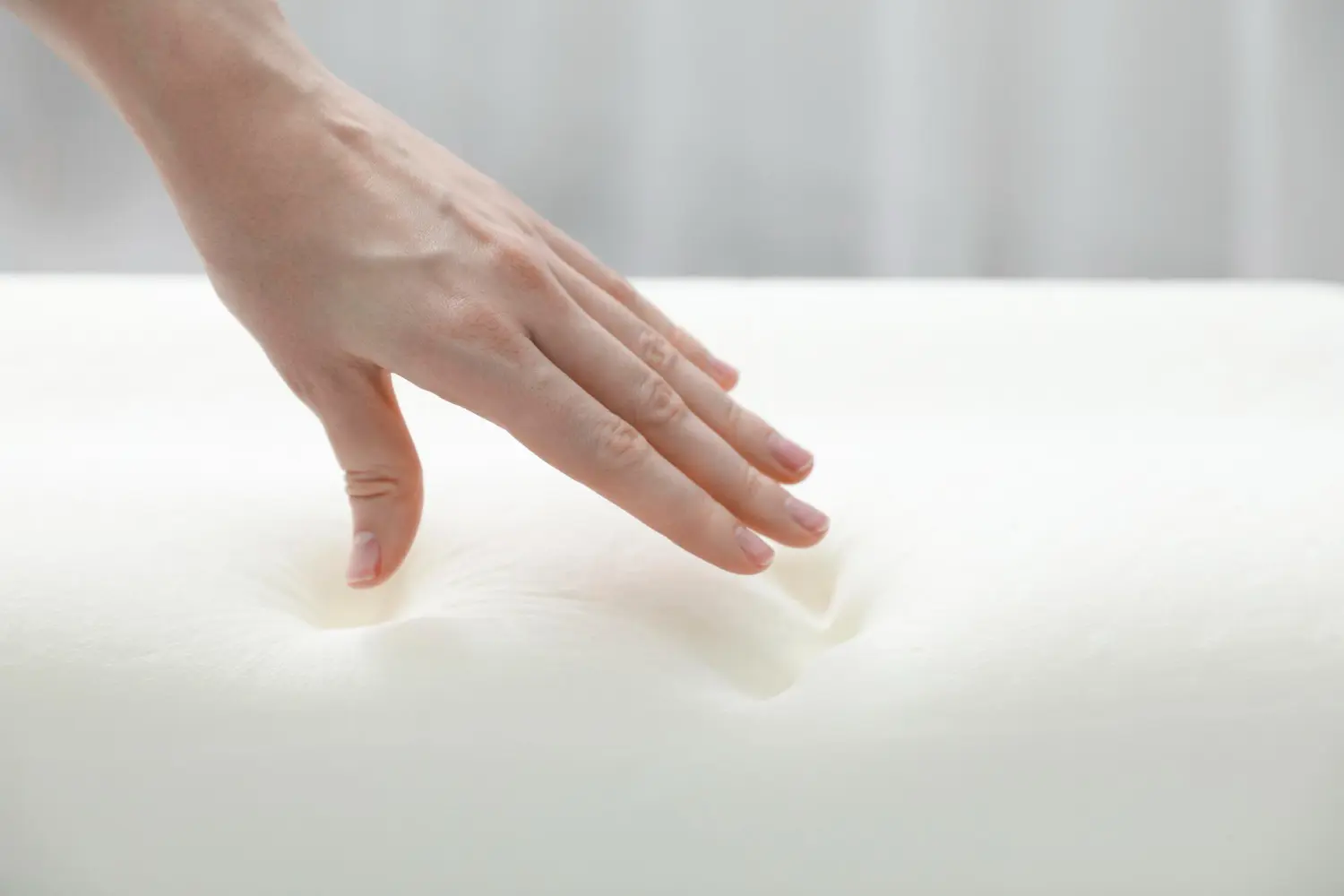
Memory foam is a type of flexible foam designed to respond to pressure and body weight.
Unlike a traditional rigid sleeping surface, memory foam can adapt to the contours of the body when pressure is applied.
When you lie down, the foam responds to the areas carrying more weight, creating a more contoured feeling around the body.
When that pressure is removed, the material gradually returns toward its original shape.
This response is one of the main reasons memory foam feels different from conventional mattress materials.
But the experience depends heavily on the quality and construction of the foam.
Why Does Memory Foam Feel So Comfortable?
There isn't one single reason.
Memory foam combines several characteristics that can make the sleeping surface feel more accommodating.
It Responds to Your Body
Instead of providing exactly the same resistance everywhere, memory foam responds to where your body applies pressure.
This can create a more personalised feeling across the sleeping surface.
Your shoulders, hips and other areas can interact with the foam differently depending on your body shape and sleeping position.
It Creates a Contoured Feel
Memory foam is known for its ability to contour around the body.
For people who enjoy a mattress that feels like it gently accommodates their shape rather than simply supporting them from underneath, this can be particularly appealing.
It Can Help Distribute Pressure
When your body rests on a mattress, some areas naturally experience more concentrated pressure.
A responsive comfort layer can help distribute that load across a broader area.
This is one reason memory foam is commonly associated with pressure-relieving comfort.
For a deeper explanation of this concept, read Why Choose a Pressure-Relief Mattress? How NapRelief Helps Create More Comfortable Sleep.
Is Memory Foam the Same as a Soft Mattress?
No.
This is an important distinction.
Memory foam can create a cushioned, contouring sensation, but that doesn't automatically mean the entire mattress has to be soft.
The overall feel of a mattress depends on its complete construction.
Different layers can contribute to:
- Cushioning
- Responsiveness
- Support
- Pressure distribution
- Stability
- Overall firmness
This means a memory-foam mattress can be designed to provide a balanced sleeping experience rather than simply creating a deeply sinking surface.
If you're deciding between different firmness levels, explore Which Mattress Firmness Is Best for You? Soft vs Medium vs Firm Mattress Guide.
How Does Memory Foam Distribute Pressure?
Imagine sleeping on a very hard, flat surface.
Certain parts of your body make more direct contact with that surface, particularly areas that naturally carry more weight.
A responsive foam layer changes that interaction.
As your body presses into the mattress, the foam adapts to the shape and pressure of the body.
This can create a broader contact area between you and the mattress.
The result is a more distributed feeling rather than pressure being concentrated at a few specific points.
This is one of the characteristics that has made memory foam popular among sleepers looking for cushioning and pressure-focused comfort.
Why Does Memory Foam Feel Different From Traditional Mattresses?
Traditional mattress materials can respond more uniformly to body weight.
Memory foam is different because its response is more gradual and contouring.
This creates the distinctive sensation people often describe as:
- Hugging
- Contouring
- Body-conforming
- Cushioned
- Pressure-relieving
However, not everyone prefers this feeling.
Some sleepers prefer a more responsive or buoyant mattress where movement feels easier.
This is why understanding the material is more useful than assuming memory foam is automatically right for everyone.
For a broader comparison, read Memory Foam vs Orthopedic Mattress: Which One Is Better for Indian Sleepers.
Does Memory Foam Provide Support?
Yes, but it's important to understand what we mean by support.
Memory foam itself is primarily known for its responsive and cushioning characteristics.
The overall support of a mattress depends on its complete construction, including the underlying support layers.
A well-designed mattress can combine:
Comfort layers → body contouring and cushioning
Support layers → structural stability and support
This layered approach allows the mattress to feel comfortable without relying entirely on one material.
It's also why mattress engineering matters so much.
Read How Modern Mattresses Are Engineered for Better Sleep to understand how different mattress components work together.
Who May Prefer a Memory Foam Mattress?
Memory foam isn't universally better than every other mattress material.
But it can be particularly appealing to certain types of sleepers.
People Who Like a Contouring Feel
If you enjoy a mattress that responds closely to your body, memory foam can provide that distinctive cushioned experience.
Side Sleepers
Side sleepers often place greater pressure around the shoulders and hips.
A responsive comfort layer can accommodate these areas while providing a more cushioned sleeping surface.
Your sleeping position should still be considered alongside firmness and overall support.
People Looking for Pressure-Focused Comfort
If your priority is a mattress that feels more accommodating around the body, memory foam may be worth considering.
However, pressure relief depends on the complete mattress construction, not simply the presence of memory foam.
People Who Prefer Reduced Movement Transfer
Memory foam can absorb some movement within the sleeping surface.
This can be useful for couples who don't want every small movement on one side of the bed to be strongly felt on the other.
For more information, read The Science Behind Motion Isolation: Why You Don't Feel Your Partner Move.
Why Foam Quality Matters
Not all memory foam performs identically.
The quality and characteristics of the foam influence:
- Responsiveness
- Durability
- Comfort
- Recovery after compression
- Overall feel
- Long-term performance
Two mattresses can both be described as "memory foam mattresses" while feeling completely different.
That's why buyers should look beyond the material name.
Understanding the actual quality and construction is much more useful.
Learn more in What Makes High Quality Foam Different From Ordinary Foam.
Can Memory Foam Sleep Hot?
This is one of the most common questions people have before buying a memory foam mattress.
Temperature performance depends on the specific foam, mattress construction, surface materials and airflow.
Some dense foam constructions can retain more heat, while modern mattress designs may incorporate materials and construction approaches intended to improve temperature management.
This is why "memory foam" alone isn't enough to determine whether a mattress will sleep hot.
If temperature is one of your biggest concerns, explore Why Does Your Mattress Feel Hot at Night? How NapBreeze Helps You Sleep Cooler and Cooling Mattresses Explained: How Temperature-Regulating Sleep Technology Works.
How NapSense Uses Memory Foam for Everyday Comfort
The NapSense Mattress is the Napmunks product to explore if you're specifically looking for memory-foam-focused comfort.
The idea behind a memory-foam mattress isn't simply to make the sleeping surface softer.
It's about creating a mattress that responds to the body and provides a more accommodating feel.
NapSense can therefore be considered by sleepers looking for:
- Contouring comfort
- Pressure-focused cushioning
- A body-responsive sleeping surface
- Comfortable everyday sleep
- The distinctive feel of memory foam
The right choice will still depend on your preferred firmness, sleeping position, body type and temperature preferences.
NapSense for Different Sleeping Preferences
If You Prefer a Cushioned Feel
Memory foam can be particularly appealing if you like a mattress that gently conforms around your body.
The NapSense Mattress is worth exploring for this type of sleeping preference.
If You Sleep on Your Side
Side sleepers can benefit from a comfort layer that accommodates areas such as the shoulders and hips.
However, the mattress should still provide enough underlying support to avoid excessive sinking.
If You Share Your Bed
Memory foam can help absorb some movement within the sleeping surface, which may make it appealing to couples with different movement patterns during sleep.
If You Want Pressure-Relieving Comfort
Memory foam's contouring characteristics can create a more accommodating relationship between the body and mattress.
If pressure relief is your primary concern, you can also explore NapRelief Mattress as another Napmunks option.
Memory Foam vs Choosing a Mattress Based Only on Firmness
When shopping for a mattress, it's easy to reduce the decision to:
Soft or firm?
But the material itself can dramatically change how that firmness feels.
Two mattresses with similar firmness ratings can feel completely different depending on their construction.
One might feel more responsive.
Another might feel more contouring.
Another might provide a cooler or more breathable experience.
This is why mattress shopping should consider the material, construction and intended sleeping experience, rather than relying on firmness alone.
Frequently Asked Questions
What makes memory foam comfortable?
Memory foam responds to body weight and pressure, creating a contouring and cushioned feel. Its ability to adapt to the body's shape is one of the main reasons many sleepers find it comfortable.
Is memory foam good for sleeping?
Memory foam can be an excellent choice for people who prefer contouring comfort and pressure-focused cushioning. Whether it is right for you depends on your sleeping position, firmness preference, temperature sensitivity and overall comfort needs.
Does memory foam support your back?
Memory foam can contribute to a supportive mattress design by responding to the body's shape and distributing pressure. However, overall support depends on the complete mattress construction rather than the memory foam layer alone.
Is memory foam too soft?
Not necessarily. Memory foam is known for its cushioning and contouring response, but the overall firmness of a mattress depends on its complete construction.
Is memory foam good for side sleepers?
It can be particularly appealing to side sleepers because its contouring characteristics can accommodate areas such as the shoulders and hips. The mattress should still provide appropriate underlying support.
Does memory foam reduce partner disturbance?
Memory foam can absorb some movement within the sleeping surface, potentially reducing how strongly movement transfers across the bed.
Does memory foam get hot?
It can, depending on the foam and overall mattress construction. Temperature performance should therefore be evaluated based on the complete mattress rather than simply the term "memory foam."
What is the difference between memory foam and ordinary foam?
Memory foam is specifically engineered to respond to pressure and body weight with a more contouring response. Conventional foams can have different properties and may feel more responsive or less conforming.
Is NapSense a memory foam mattress?
The NapSense Mattress is the Napmunks product to explore if you're looking for memory-foam-focused comfort and a body-responsive sleeping experience.
Should I choose NapSense or NapAlign?
It depends on what you prioritise. NapSense is the product to explore for memory-foam-style contouring comfort, while NapAlign is positioned around supportive comfort and alignment.
Continue Reading
If you're researching memory foam and mattress construction, these guides can help:
- Memory Foam vs Orthopedic Mattress: Which One Is Better for Indian Sleepers
- What Makes High Quality Foam Different From Ordinary Foam
- How Modern Mattresses Are Engineered for Better Sleep
- Why Mattress Support Matters More Than Mattress Softness
- The Science Behind Motion Isolation: Why You Don't Feel Your Partner Move
- What Makes a Premium Mattress Feel Premium? 7 Features That Actually Matter
Final Thoughts
Memory foam has become popular for a simple reason: it offers a distinctly different way for your body to interact with a mattress.
Its ability to respond to pressure and contour around the body can create a cushioned, accommodating sleeping experience that many people prefer over more traditional mattress constructions.
But the words "memory foam" shouldn't be the only thing you look at.
The quality of the foam, the complete mattress construction, support system, temperature management and manufacturing quality all influence how the finished product performs.
For sleepers who specifically want the contouring and cushioning characteristics associated with memory foam, the NapSense Mattress is a natural place to explore within the Napmunks range.
You can also explore the complete Napmunks Mattress Collection and compare different approaches to comfort, support and temperature management.